
What Is B2B Sales? A Practical Guide for Small Firms

Published on 11 August 2026
Business AI Agents logo
Dr. Shadi Ghaith Founder, Business AI Agents ·

B2B sales means one business selling its products or services to another business rather than to a member of the public. The buyer is an organisation — usually several people inside it — the decision takes weeks rather than minutes, and it has to be justified on return rather than on impulse.

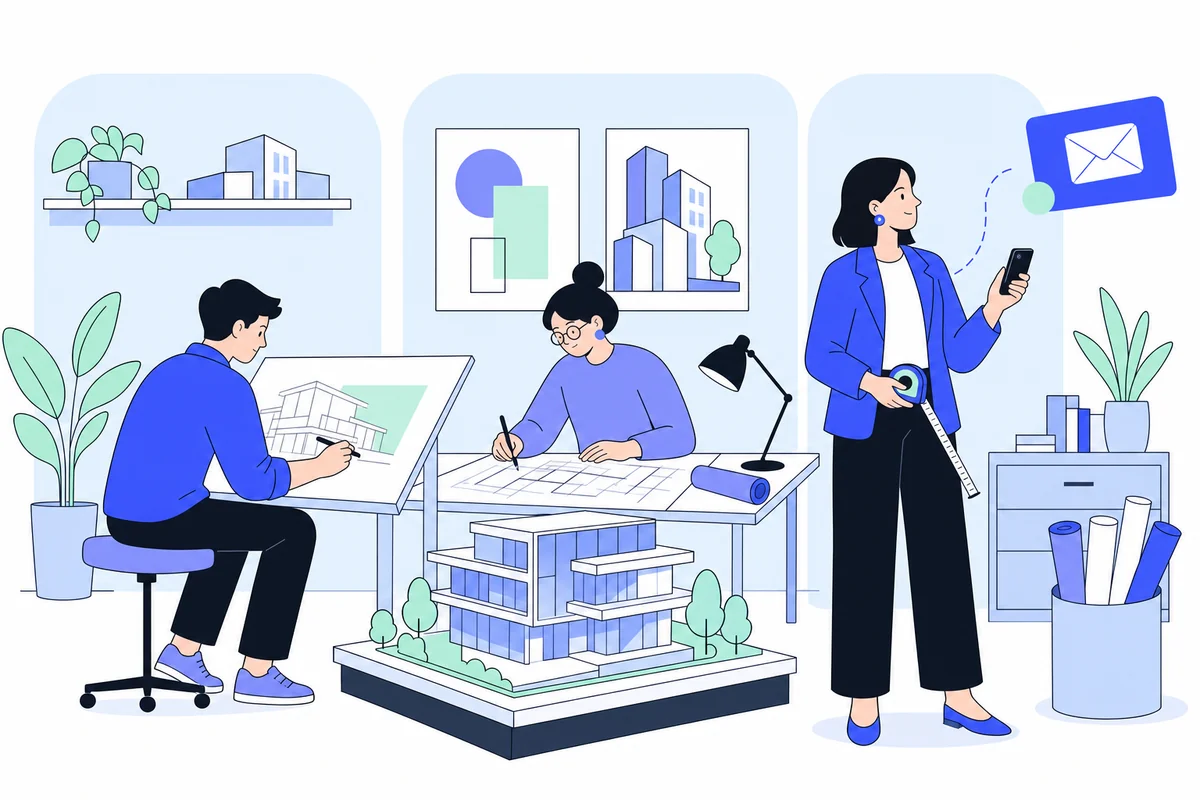
Small architecture practice at work while a new business enquiry arrives on a phone
The enquiry never arrives when you are sitting at a desk waiting for it.

What is B2B sales, and what does it look like on a Tuesday?

Tuesday, 11.20am, an architecture practice above a bakery in Leeds. Six people, one of whom is also the entire sales department, and she is currently standing on a flat roof in Wakefield with a tape measure and a phone on 4% battery.

An email lands. A developer she met once at a planning meeting wants a fee proposal for a feasibility study on a 40-unit scheme. She reads it at 7.40pm in the car park. She writes a careful, genuinely good reply at 9pm from her kitchen table.

It is the third reply the developer has read that evening.

That is B2B sales. Not a boardroom, not a pitch deck, not a headset. It is an enquiry from another business that arrived while you were doing the work that business is thinking of buying.

What does B2B sales mean, exactly?

B2B sales — business-to-business sales — is the process of selling to an organisation rather than to a consumer. The buyer is a company, a practice, a charity or a public body, and the person you speak to is spending someone else's budget under someone else's scrutiny.

That last clause is the whole subject. Everything odd about B2B sales follows from it. Your contact has to explain the purchase to a finance director. They have to be able to defend it in six months if it goes badly. They will happily take three weeks to make a decision they could make in ten minutes, because being slow is cheap and being wrong is not.

So B2B sales is rarely persuasion. It is mostly the removal of reasons to say no, delivered patiently, to people you will never meet.

B2B vs B2C: the differences that change what you actually do

The same architect sells both. A loft extension for a couple in Chapel Allerton is B2C: one household, their own money, a decision made over a weekend. The 40-unit feasibility study is B2B: a developer, a lender's expectations, a board paper, six weeks. Identical craft, different sport.

What differsB2C salesB2B salesWhat that means for you
Who decidesOne person, sometimes twoA group, often across departmentsWrite for the person who was not on the call
Whose moneyTheir ownThe organisation'sJustification matters more than desire
Time to decideMinutes to daysWeeks to monthsYour follow-up is the product
What triggers itWant, need, impulseA problem with a cost attachedLead with the cost you remove
What happens afterThe sale endsThe relationship startsDelivery is next year's pipeline

The row that catches small firms out is the third one. In B2C, a slow reply loses one job. In B2B, a slow reply loses a client who would have sent you work for a decade.

What are B2B sales in practice? The five types

"B2B" covers wildly different businesses, and the sales motion is not the same in each. It helps to know which one you are in, because advice written for enterprise software rarely survives contact with a six-person practice.

TypeWhat is soldUK exampleTypical cycle
Professional servicesExpertise and timeArchitects, solicitors, accountants, consultants2–8 weeks
Software and subscriptionsA tool, billed monthlyPractice management systems, AI agents2 weeks–6 months
Supply and consumablesThings the buyer uses upMaterials merchants, printers, catering suppliersDays, then repeat
Wholesale and distributionStock the buyer resellsTrade distributors supplying retailersDays to weeks
Public sector (B2G)Anything, via procurementCouncil frameworks, NHS contracts3–12 months

Most UK small firms reading this sit in the first two rows, where the deal is worth a few thousand to a few tens of thousands of pounds, the buyer is one or two people, and nobody involved has ever used the word "procurement" without irony.

What is business to business marketing, and where does sales start?

Business to business marketing builds demand and reputation across a market: the website, the case studies, the piece in the trade press, the talk at a CPD event. B2B sales converts one named buyer at a time: the proposal, the objection, the signature.

The practical line between them is a name. Until you know who the buyer is, you are marketing. The moment a real person with a real budget is in front of you, you are selling. Everything the marketing did before that point decides how easy the selling is — which is why the developer rang an architect he half-remembered from a planning meeting rather than searching for one.

What is outbound sales, and is inbound better?

Outbound sales is you starting the conversation with someone who did not ask: a cold call, a targeted email, a message to a developer whose planning application you spotted. Inbound is the opposite — the buyer arrives already looking, through search, referral or reputation.

Neither is better. They fail differently, and small firms usually need both.

What differsOutbound salesInbound sales
Who startsYouThe buyer
VolumeYou control itYou wait for it
Odds per conversationLow, and honestly soMuch higher — they already have a problem
Time costConstant and unglamorousFront-loaded into content and reputation
Where it breaksNobody does it once work gets busyEnquiries go cold before anyone replies
Best used forFilling a quiet quarter you saw comingEverything else

Read the last row of that table again, because it is the whole problem in miniature: both channels fail for the same reason, and it is not strategy. It is that the people who would do the work are already doing the work.

How big is the UK B2B market, honestly?

Big, and much smaller than the headline. At the start of 2025 there were 5.7 million private sector businesses in the UK, according to the Department for Business and Trade — a number that gets quoted in a lot of optimistic pitch decks.

The same release says 4.3 million of them employ nobody but the owner. If you sell something a sole trader will never buy, three-quarters of that market is decoration. The 5.64 million SMEs do account for 60% of private sector employment and £2.8 trillion of turnover, so the money is genuinely there. It just is not spread the way the headline number suggests.

Working out which slice can actually buy from you — by size, sector and geography — is the least glamorous hour in B2B sales and the one that saves the most wasted effort. It has a name, if you want one: your addressable market.
Need Help with AI Solutions?

Get in touch with our team or try our AI assistant.

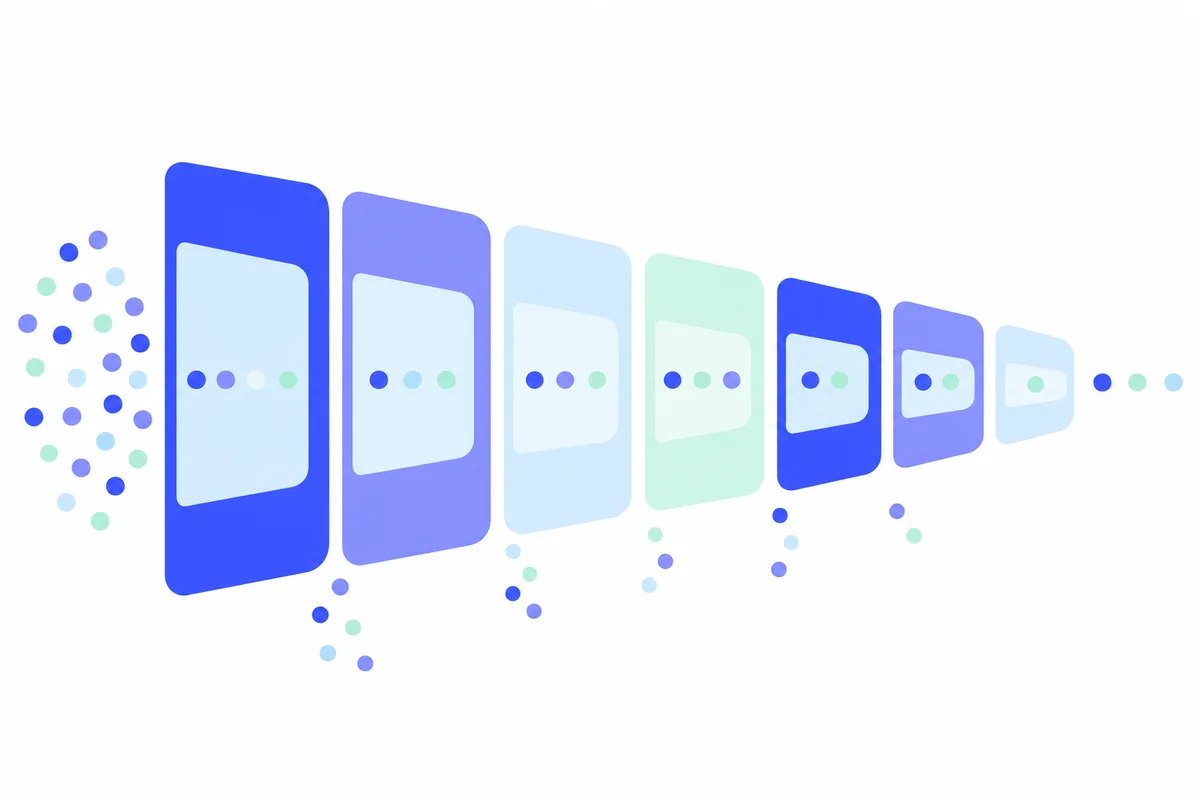
Pipeline diagram showing prospects moving through seven narrowing stages and dropping away between them
Seven stages. Most small firms lose deals in the gaps between them, not inside them.

The B2B sales process, and where it breaks in a small firm

The B2B sales process is the repeatable sequence a deal travels through, from first contact to signature and beyond. Most versions have five to eight stages; the names vary, the shape does not. Below is the seven-stage version, with the bit the textbooks leave out — what each stage looks like when the salesperson is also the architect, and where it actually breaks.

The seven stages

StageWhat it isIn a six-person firmWhere it breaks
1. ProspectingFinding businesses that could buyPlanning portals, referrals, the odd eventStops entirely the week you get busy
2. QualifyingDeciding who is worth your timeA gut call on the phoneEveryone gets a proposal, including the tyre-kickers
3. DiscoveryUnderstanding the real problemOne good conversation on siteDone well, then never written down
4. ProposalPutting numbers and scope on paperTwo evenings and a weekendPriced from the work, not the buyer's risk
5. ObjectionsAnswering fee, programme and capacity worriesA phone call, if they ringThey do not ring. They go quiet
6. ClosingAgreeing terms and signingAn email and an appointmentChased once, then abandoned politely
7. KeepingDelivery, then the next commissionExcellent delivery, no follow-upThe client forgets you before the next scheme

Look down the last column. Almost none of those failures are skill failures. They are attention failures. That distinction matters, because you cannot train your way out of not being at your desk.

How to qualify without a sales framework

Qualifying means deciding, early and deliberately, whether a prospect is worth your evening. The two frameworks you will meet everywhere are BANT — budget, authority, need, timing — and MEDDIC, a longer version built for enterprise software deals with a dozen stakeholders.

Both are fine. Both are also more machinery than a six-person practice needs, and the acronym is usually the reason nobody bothers. The version that survives real use is three questions, asked of every enquiry, in whatever order feels natural:

  • What are you trying to do, and by when? Covers need and timing at once, and a vague answer to this is the single strongest predictor of a deal that never closes.
  • Who else needs to agree? Covers authority without asking anyone whether they are important. It also tells you who to write the proposal for.
  • Have you put a figure to it yet? Covers budget without demanding a number. "Not yet" is a perfectly good answer — it just means you are earlier than you thought.

Three answers, written down, are worth more than a filled-in framework nobody reads. And they are the part of the process a machine can genuinely ask on your behalf.

Who you are actually selling to

You are rarely selling to the person emailing you. In a business purchase of any size there is a group: the person with the problem, the person with the budget, someone technical, and at least one person whose job is to ask what happens if it goes wrong. Gartner's research has long put that group at roughly six to ten people for complex purchases, each arriving with their own information.

Two more recent findings are worth knowing, because together they explain modern B2B behaviour better than anything else I have read. Gartner reported in March 2026 that 67% of B2B buyers prefer a rep-free buying experience. Two months later it reported that 69% turn to a sales rep to validate insights they generated with AI.

Those are not contradictory. They describe a buyer who wants to do all the looking alone, and then wants a human to tell them whether what they found is true. Which means your job has quietly changed. You are no longer the source of information. You are the person who confirms it — and you only get that job if you are reachable at the moment they decide to check.

The stage everyone loses: the follow-up

The most expensive gap in small-firm B2B sales sits between the enquiry arriving and someone replying to it.

The canonical measurement here is old, and I will date it plainly: Dr James Oldroyd's Lead Response Management study, run at MIT in 2007 across more than 15,000 leads and 100,000 call attempts. It found that the odds of contacting a lead dropped 100 times between a 5-minute and a 30-minute response, and the odds of qualifying one dropped 21 times.

Nineteen years later, mobile phones have made buyers faster and firms no quicker. The finding has been replicated often enough that it is now simply how the market works: the first credible response usually wins the conversation, and everything after that is competing for second place.

Now put that next to the roof in Wakefield. The architect did not lose that scheme because her proposal was weak. She lost it because the enquiry landed at 11.20am and the answer left at 9pm, and by then the developer had a shortlist.

B2B sales when you are also the person doing the work

Here is the part every guide to B2B sales skips, and it is the part that matters most in the UK. The advice is written for companies with a sales team — quota attainment, buying committees, sales and marketing alignment, a CRM that someone is paid to maintain. It assumes a division of labour that most British businesses simply do not have.

In a firm where the director is also the salesperson, the constraint is not knowledge. It is that selling and delivering compete for the same eight hours, and delivery always wins, because delivery has a client shouting and sales has only a possibility.

So the realistic goals are narrower than the textbooks suggest, and worth stating plainly:

  • Never let an enquiry sit unanswered for hours. Not a full proposal — an acknowledgement, from a human or a system, with a specific next step and a time.
  • Qualify before you write. A proposal costs you an evening. Three questions on the phone cost four minutes and prevent most of the wasted evenings.
  • Follow up on a schedule, not a feeling. Most small-firm deals die at the second follow-up that nobody sent, and there is no emotional energy left for it at 9pm.
  • Write down what you learned. The discovery conversation is worth more than the proposal, and it currently lives in one person's head, on a roof.

All four are jobs of attention rather than judgement. That is precisely the shape of work a machine can take.

Where AI genuinely helps — and where it does not

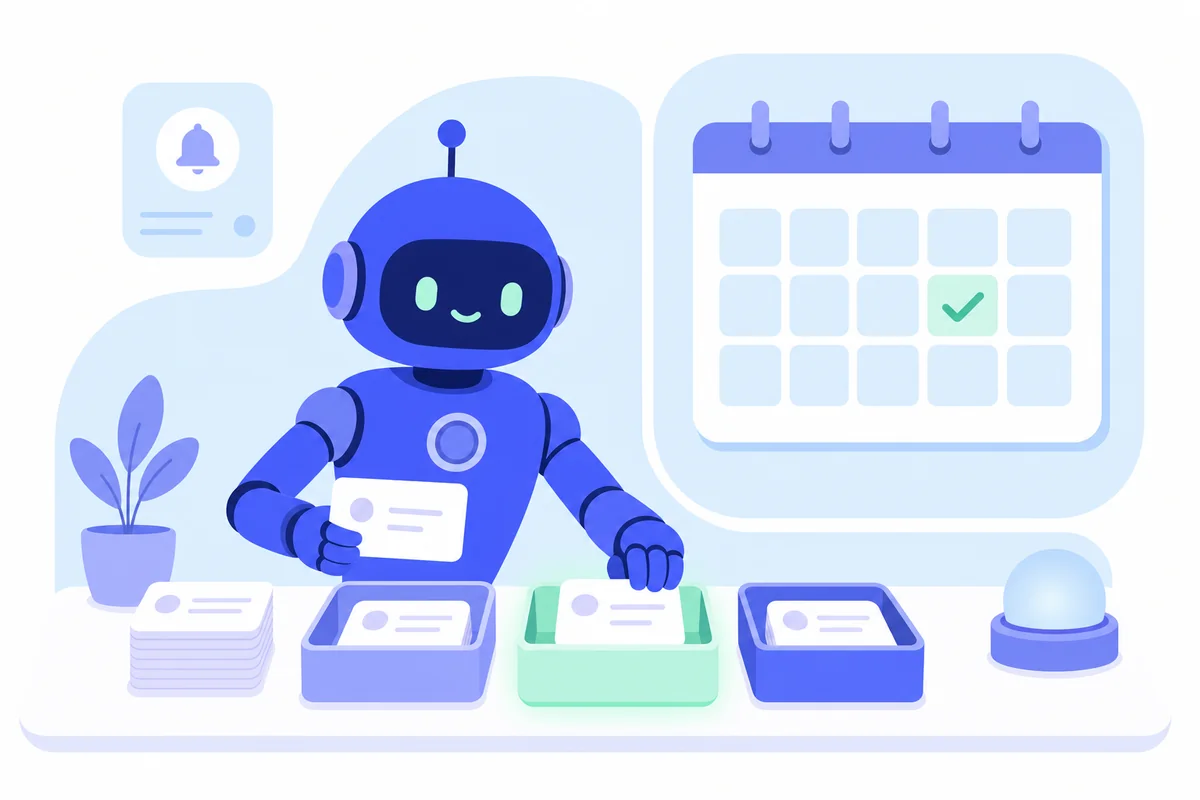
An AI sales agent is not a robot closer. Mechanically it is much duller: a system that watches the channels enquiries arrive on, replies within seconds, asks a short set of qualifying questions in plain language, writes the answers into your records, offers times from your real calendar, and keeps chasing on a schedule until someone replies or the trail goes cold.

Nothing in that list is persuasion. All of it is attendance. Here is the honest split, stage by stage.

StageWhat an AI agent can genuinely doWhat it still cannot do
ProspectingWatch sources, build and enrich lists, draft first approachesKnow which developer is worth a personal call
QualifyingReply in seconds, ask the same questions every time, score the answersRead the hesitation in someone's voice
DiscoveryCapture, transcribe and file what was saidAsk the unexpected question that changes the brief
ProposalAssemble a first draft from your templates and notesSet the fee, or decide what you will not do
ObjectionsAnswer the routine ones instantly and around the clockHandle the awkward conversation about a fee
ClosingBook the meeting, send the paperwork, chase the signatureEarn the trust that makes signing feel safe
KeepingRemember every client and prompt you at the right timeBe the reason they come back

The right-hand column is not a disclaimer. It is the point. B2B sales in a small firm is won on relationships that only the owner can build, and lost on admin that nobody has time for. Automating the left-hand column exists to give you more hours for the right-hand one.

How do you measure B2B sales in a firm this size?

Not with a dashboard. Most sales metrics assume a team, a quota and a CRM someone maintains; a six-person practice has none of those and does not need them. Three numbers will tell you almost everything, and all three can be counted by hand in an afternoon.

NumberHow to count itWhy it is the one that matters
First-response timeEnquiry timestamp to your first real reply, averaged over a fortnightThe only metric you can improve this week, and usually the worst one
Proposal win rateProposals sent, divided into proposals won, over a yearBelow roughly one in four, you are writing too many. Above one in two, you are quoting too cheaply
Cycle lengthFirst contact to signature, per won dealTells you how far ahead to be prospecting, which is the question that causes quiet quarters

Those benchmarks are rules of thumb from professional services, not laws — a practice bidding for public frameworks will win a far smaller share and should. The value is in tracking your own three numbers over time rather than comparing them with anyone else's.

Need Help with AI Solutions?

Get in touch with our team or try our AI assistant.

AI assistant sorting incoming enquiries into trays and booking a slot on a calendar
Sorted, scored, answered in seconds and booked into a real calendar. The unglamorous half.

How we build B2B sales agents at Business AI Agents

We build AI agents for UK small and medium businesses, so the system described above is not a thought experiment. It is our Leads Outreach product, and the first place we ran it was on ourselves.

The chat agent on this page is that system. Every enquiry it takes reaches me — I read all of them personally and reply within 24 to 48 hours. The agent's job is not to replace that reply. It is to make sure nobody waits nine hours for the first one.

What we actually set up for a practice like that one

  • Instant, honest acknowledgement. An enquiry arriving at 11.20am gets a reply in seconds that says what happens next and when — not a chirpy auto-responder pretending to be a person. Buyers forgive a machine; they do not forgive nine hours of silence.
  • Three qualifying questions, asked every time. Scheme, timescale, and whether there is a budget agreed. The answers get scored and written down, which is more than most evenings on a roof manage.
  • Booking into the real calendar. The agent offers slots that genuinely exist and holds them. Half of B2B sales is arranging to speak to each other, and it is entirely mechanical.
  • Follow-up that does not need willpower. Second, fifth and twelfth-day chases go out whether or not anyone feels like sending them. This is the single change that recovers the most work.
  • The other two channels. Enquiries that come by phone are the same problem in another medium, which is what our AI Receptionist answers and books, while the Email Manager sorts and drafts the pile that builds up behind both. We wrote up how the scoring works in our guide to AI lead scoring for UK SMB sales, and the wider pipeline in AI lead generation automation for UK SMBs.

The honest limits

Three things we would rather say now than after an invoice.

First, an AI agent cannot rescue an offer nobody wants. If enquiries are not arriving, the problem is upstream in marketing and reputation, and automating the follow-up on four leads a quarter will change nothing. We will tell you that on the first call rather than the third.

Second, we start these agents in draft mode. For the first fortnight the system qualifies and proposes, and a person approves everything before it goes out. When the edits stop, we widen what it may do alone. Starting at full autonomy is how you learn about your edge cases from a client instead of from a log.

Third, tone is a real risk in outbound. An agent that sounds like a template will damage a reputation faster than silence would, particularly in professional services where the buyer knows everyone you know. We tune the voice on your own past correspondence, and we would rather send fewer, better messages.

And because the agent handles other people's contact details to do any of this, under UK GDPR you remain the data controller. Keep the agent's access as narrow as the job requires, switch off model training on your data, log what it did and to whom, and be ready to answer a subject access request about it. The ICO's direct marketing guidance is the plain-English source on what you may send to whom, and our own privacy policy is the canonical wording for how we handle ours.

Need Help with AI Solutions?

Get in touch with our team or try our AI assistant.

B2B sales: your questions answered

Frequently asked questions

What is B2B sales in simple terms?

B2B sales is one business selling to another business instead of to a member of the public. An architect selling a feasibility study to a developer is B2B. The same architect designing a loft extension for a homeowner is not. The buyer is an organisation, and the money is not their own.

What does B2B sales mean day to day?

Mostly it means waiting, chasing and explaining. Days of research the buyer does without you, a proposal read by people you have never met, and follow-ups that decide the outcome. Very little of it is persuasion. Most of it is being useful, and being there at the right moment.

What is the difference between B2B and B2C sales?

B2C sells to one person spending their own money, usually in minutes. B2B sells to a group spending the company's money, usually over weeks or months, against a written justification. The product may be identical. The buying behaviour is not remotely the same.

What is outbound sales?

Outbound sales is you starting the conversation: a cold call, a targeted email, a message to someone who has never heard of you. Inbound is the reverse, where the buyer arrives already looking. Outbound gives you control over volume; inbound gives you better odds per conversation.

What is business to business marketing, and how is it different from B2B sales?

Business to business marketing creates demand and reputation across a whole market at once. B2B sales converts one named buyer at a time. Marketing makes the developer aware you exist and worth shortlisting; sales is the fee proposal, the objection about programme, and the signature.

How long is a typical B2B sales cycle?

For small professional services, roughly two to eight weeks from first enquiry to signature. Larger or regulated purchases run three to six months, sometimes longer. The length is set by how many people must agree and how much of the budget is at risk, not by how good your proposal is.

Can a small business do B2B sales without a sales team?

Yes, and most UK firms do. Roughly 4.3 million of the 5.7 million private sector businesses employ nobody but the owner. The constraint is not skill, it is attention: the work and the selling compete for the same hours, and the selling is what gets dropped.

Where to start this week

If you take one thing from this, take the response time. Measure it honestly for a fortnight — the gap between an enquiry arriving and a real human reply leaving — and write the number down. Almost nobody guesses it correctly, and it is usually the cheapest thing to fix.

Then pick the second job: a written set of three qualifying questions, asked of every enquiry, by whoever or whatever answers first. It costs nothing and it protects your evenings.

Back to the roof in Wakefield. Same Tuesday, same 4% battery, same email from the developer at 11.20am. This time he has a sensible reply within a minute, three questions answered by the end of the morning, and a call in the diary for Thursday at 8am — booked while the architect was still holding the tape measure. She writes the same careful proposal that evening. It is the first one he reads.

If your enquiries are currently waiting until 9pm, talk to us and we will tell you honestly whether you need an agent or just a better first reply. Or ask the chat agent on this page — it is the same system, doing the job on us.