
GDPR Compliant AI London: No Processor, No Transfer
London firms sign off AI slowly because their clients are international and their engagement terms are strict. A machine at your own premises removes the two questions that take longest: who processes the data, and where it goes.
£500 per month for the software and the hardware rental. You rent the machine — you don’t buy it.
GDPR compliant AI in London means AI used in a way that meets the UK GDPR and Data Protection Act 2018, and the hardest part is where personal data is processed. A machine installed at your London office means no third-party AI processor and no restricted transfer for the AI step; lawful basis, retention and staff conduct remain yours.
Bring your DPO to the call
Bring your DPO. We will walk through the data flow line by line before any hardware is ordered.
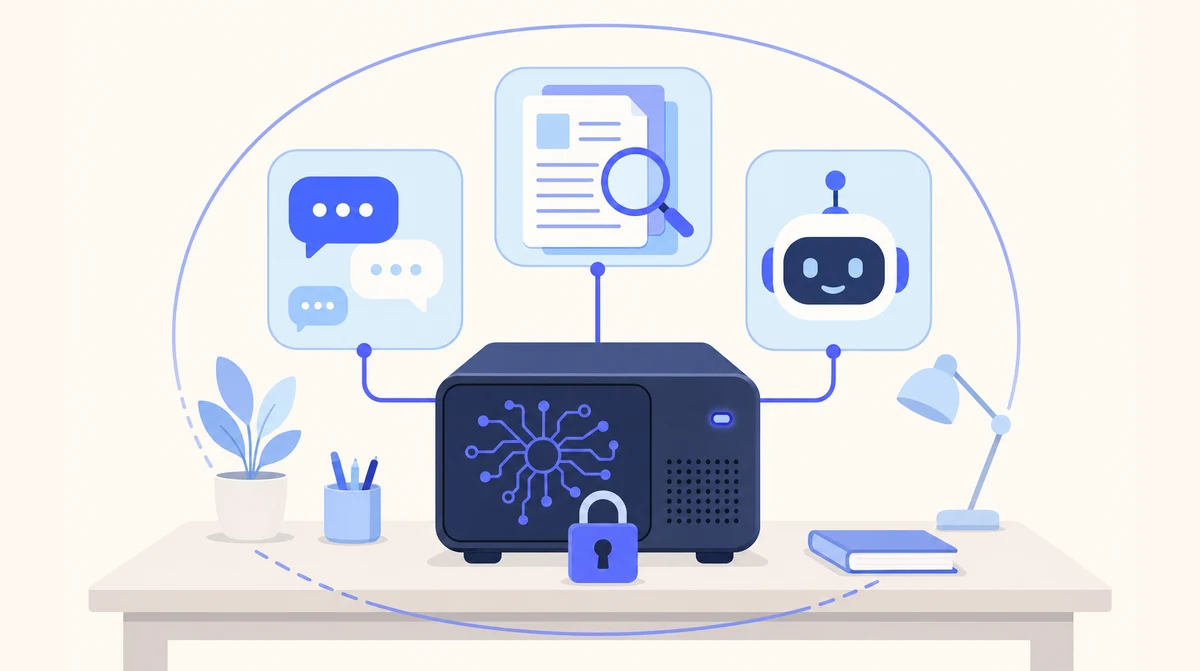
Model, documents and chat history on one machine at your London premises. The only outside connection is your own sign-in.
Cloud Agents for the Phone and Inbox, Local AI for the Files
Many London businesses pair the two: hosted agents answering calls and sorting email from day one, and a Local AI machine on site for anything that must not leave the office.
- ☁ Cloud-based AI Receptionist
- ☁ Cloud-based Email Manager
- ☁ Cloud-based Leads Outreach
- 🏢 On-premise Local AI
The Questions Your DPO Asks About AI and GDPR Compliance
Most of the hard work in an AI GDPR assessment is about the processor and the transfer. Here is what each looks like for London firms.
| The question | Cloud AI service | A machine in London |
|---|---|---|
| Who is the processor for the AI step? | The AI provider — appoint, assess, contract, review | Nobody — the model runs on your own machine |
| Is there a restricted transfer? | Often — IDTA or UK Addendum, plus a transfer risk assessment | No — the data never leaves the building |
| Is our data used to train models? | Depends on the plan, the settings and the small print | Never |
| What goes in the Article 30 record? | A new processor and, often, a new transfer | One fewer of each |
| Erasure requests | Your copy and theirs | Your copy only |
| Lawful basis, purpose, retention | Yours | Still yours |
Why the Transfer Question Bites Hardest in London
A London DPO assessing a cloud AI tool has a longer list than most. The firm’s clients are international, so the personal data in a matter or a patient file often belongs to people outside the UK and is subject to more than one regime. The provider processes data in a jurisdiction the DPO has to name, so a restricted transfer needs a mechanism — the IDTA or the UK Addendum — and a transfer risk assessment. And the engagement letter from the client’s general counsel forbids third-party processing anyway, so the whole exercise may be moot.
A machine at your London premises takes those items off the list rather than answering them. The model runs on your own network; documents, prompts and chat history stay on it. There is no AI provider processing personal data on your behalf, so no Article 28 contract for that step. Nothing leaves the building, let alone the country, so no transfer mechanism and no risk assessment. The Article 30 record gains one fewer processor and one fewer transfer to describe. The client’s clause is not engaged because there is no third party.
What stays with the firm is what was always the firm’s: purpose, lawful basis, retention and who has access — the last one set through the Microsoft 365 or Google Workspace sign-in you already administer. Security of processing under Article 32 becomes a question about your own network and your own building, which you already answer for everything else you hold. Serviced offices need one extra check on network segmentation, which we make on the first call.
We act as a processor only for the support access you grant us, under a data processing agreement drawn narrowly. We would rather your DPO was on the first call, and we will walk through the data flow with them line by line. That is usually a shorter meeting than the one about the cloud tool.
What Is Installed, and What the Paperwork Looks Like
The machine, the software on it, the sign-in and the support — and the two documents your advisers will ask for.
No third-party AI processor
The model runs on your own machine, so your documents are never sent to an AI provider. Nothing to appoint, assess or keep under review for the AI step.
No restricted transfers
Your data never leaves the UK. The IDTA, the UK Addendum and a transfer risk assessment simply do not arise for the processing it does.
A shorter Article 30 record
One fewer processor and one fewer transfer to describe, review and keep current — and one less thing to explain if the ICO ever asks.
| Document | What a London team asks for | What stays where |
|---|---|---|
| Client files under restrictive engagement terms | Search, summarise, draft against | On the machine, in your office |
| Cross-border matter correspondence | A chronology or summary, cited to the page | On the machine, in your office |
| Contracts and agreements | What clause 14 says; the differences between versions | On the machine, in your office |
| Patient or client correspondence | A draft reply in your wording | On the machine, in your office |
| Internal policies and templates | Find it, cite it, draft from it | On the machine, in your office |
| Your practice, case or CRM system | Not connected — remains the system of record | Your existing system |
From Sign-Off Blocker to a Machine at Your London Premises
Weeks, not months. Most London clients start with one team — one practice area, one department — and widen from there.
Size and check the site
A short call on who will use it and what it will read. We specify the machine and, for serviced offices and shared buildings, check how the network is arranged.
Install at your premises
The machine goes on your network anywhere in Greater London. Single sign-on connects to your Microsoft 365 or Google Workspace and your documents are imported into spaces.
Train on site, then support
We train the people using it at your office, then keep the software updated and the models current, with support from the people who did the install.
Where Local AI Is the Wrong Answer
We would rather lose the enquiry than the trust. Three things we tell every prospect before they sign anything.
It is not a compliance certificate
No product can make London firms UK GDPR-compliant on their own. A machine in the building removes the processor and transfer questions for the AI step. Purpose, lawful basis, retention and staff conduct remain yours, and we will not tell you otherwise.
It is slower than the big cloud models
Open-weight models on a single machine are capable for summarising, drafting and answering questions about your own documents. For frontier reasoning on hard, novel problems, the largest cloud models are still ahead. That is the trade.
It is a weeks-long install, not a sign-up
A cloud agent is live in days. Local AI needs the machine specified, delivered, installed on your network and your documents imported. Weeks, not months — but not tomorrow.
Built With the Regulator in Mind
Data never leaves the building
Open-weight model, documents and chat history on one machine in London. The only outside connection is your own sign-in.
Never used for training
Your content is not used to train or improve any model. The models arrive trained and stay that way unless you ask.
One DPA, for one thing
We are a processor only for the support access you grant, and the agreement says so in plain terms.
Honest about the trade
Local models are capable and somewhat slower than the largest cloud services. We say so before you sign anything.
Which Page Answers Your London Question
| If your question is… | The short answer | Read more |
|---|---|---|
| The general GDPR picture for AI | The processor and transfer questions, in full | GDPR compliant AI |
| We want the Local AI overview for London | The head page for the capital | Local AI London |
| What exactly is installed? | One machine, on site, supported | On-Premises AI London |
| Is this what people mean by private AI? | Yes — private by construction | Private AI London |
| We are a City law firm | The COLP’s questions, answered | GDPR Compliant AI for solicitors |
| We are in Manchester, not London | The same questions, Greater Manchester | GDPR Compliant AI Manchester |
| Why on-premises at all? | The case for Local AI, in full | Local AI product page |
AI and GDPR Compliance in London: Common Questions
Is there such a thing as GDPR compliant AI?
Not as a product label. Compliance is a property of how London firms use a tool, not of the tool. What a product can do is make the assessment easier: a machine in London removes the processor and transfer questions for the AI step entirely.
Do we need a DPIA for AI?
Often, yes, and we would rather you did one. A machine in the building makes it shorter: the questions about the processor, the transfer mechanism and the training use of your data have plain answers. Purpose, lawful basis, retention and access are still yours to answer.
Our clients are outside the UK. Does on-premises AI change the international transfer analysis?
For the AI step, yes: nothing leaves your London office, so there is no restricted transfer to justify and no transfer risk assessment for that processing. Transfers you already make for other reasons are unaffected. We will walk your DPO through the data flow.
Can we show a client exactly where their data is processed?
Yes, in a sentence: on a machine in your own office, on your own network, never sent to an AI provider. For clients whose engagement terms forbid third-party processing, that sentence is usually the whole answer.
Do you install on site in London?
Yes. The machine is specified after a short call, then installed on your network at your premises anywhere in Greater London. We connect your existing Microsoft 365 or Google Workspace sign-in, import your documents and train your team on site.
We are in a serviced office. Does that matter?
It is worth raising early. The machine sits on your own network segment, and in a shared building we check how that network is arranged before the install. A question for the first call, not a blocker.
How much does Local AI cost?
£500 per month for the software and the hardware rental. The dedicated machine is rented to your business, not sold: you never buy the hardware. It is installed in your building and runs the private chat, document spaces and assistants. Local AI is for business customers only.
Bring the Hard Questions to the First Call
Tell us what is blocking AI sign-off at your London office. We will walk through the data flow with your DPO and say plainly what a machine on site settles and what it does not.
Prefer email? sghaith@businessaiagents.co.uk