
What people mean when they ask how to create an AI
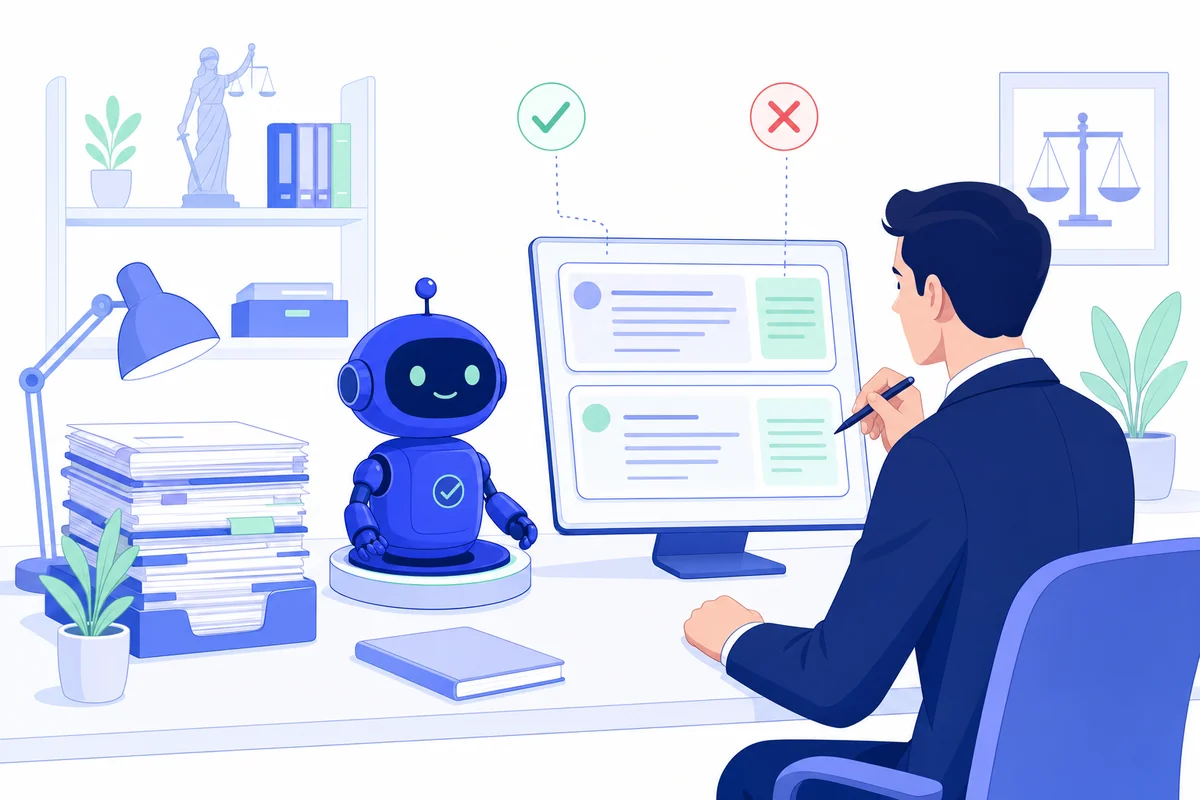
Friday, 5.50pm, a four-partner solicitors' firm. The practice manager is going through the week's new enquiries: 31 of them, and 11 have had no reply. Not because anyone is lazy — because each one needs somebody to read it, work out whether it's conveyancing or probate or a wrong number, check for a conflict, and write back. That is fifteen minutes each, and nobody has had a spare fifteen minutes since Tuesday.
One of the partners says the thing that everybody says: "Can't we just build our own AI to do this?"
It's a fair question, and it sends people straight to a search engine, where the top results explain how to collect a dataset, engineer features, pick an algorithm, train a model, and tune the hyperparameters. All of that is genuinely how a machine-learning model gets built. Almost none of it is what the firm needs. They don't want a model. They want the enquiries answered by Monday.
The three routes, and which one you actually need
"Create an AI" covers three very different jobs. Picking the wrong one is the single most expensive mistake in this whole field, so it's worth thirty seconds of honesty about which one you're in.
| Route | What it actually involves | Who it suits | Realistic timescale |
|---|---|---|---|
| Train a model from scratch | Gathering and labelling your own data, choosing an algorithm, training, evaluating, hosting and retraining it forever | Organisations with a genuinely unique dataset and people whose job title is "data scientist" | Months, and it never really finishes |
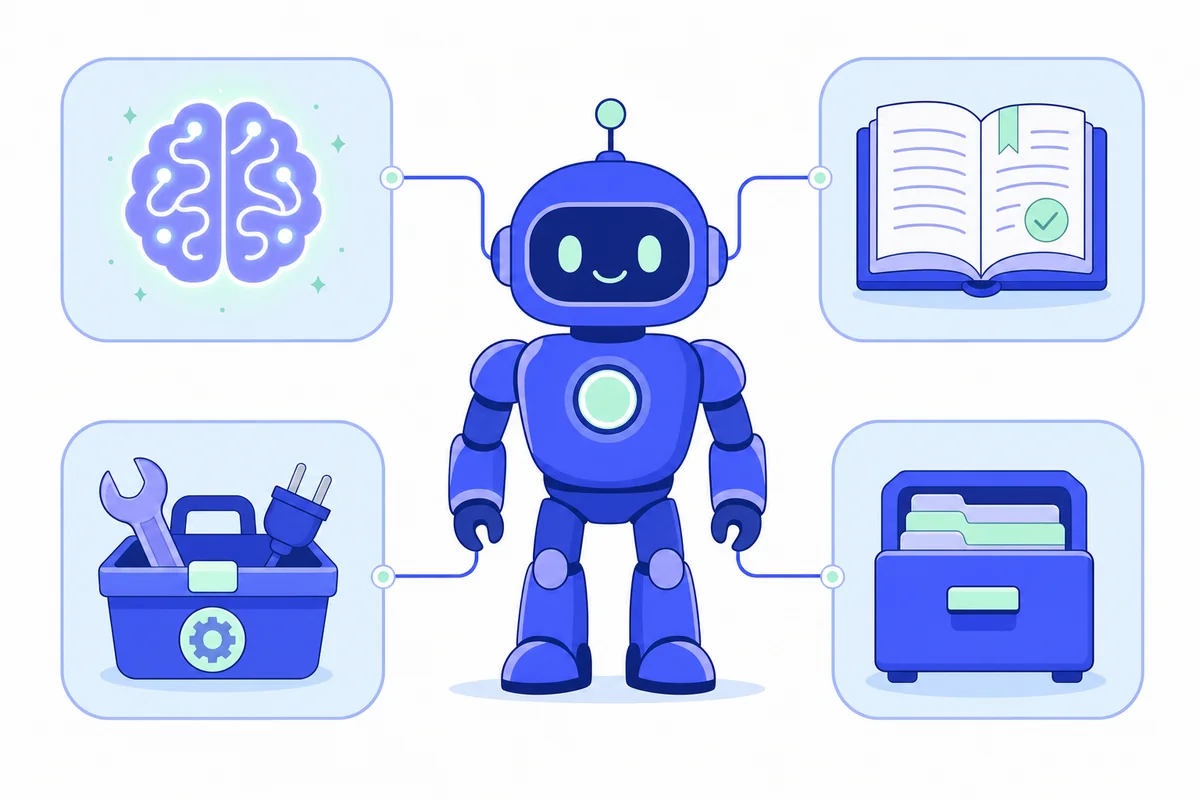
| Assemble an agent on an existing model | Writing instructions, connecting your systems as tools, testing against real past cases, adding review rules | Almost every small and medium business, for almost every job | Days to a few weeks per job |
| Configure something already built | Switching features on, importing your data, setting a few rules | Jobs an off-the-shelf product already solves well | Hours |
Read the middle row twice. That's where the answer lives for the overwhelming majority of UK businesses, and it's the row the search results skip. You are not creating intelligence. You are hiring some, cheaply, from a model that already exists, and then doing the actual work: telling it precisely what your business needs done and giving it the keys to do it.
Why so many of these projects get cancelled
UK businesses are past the wondering stage. The Office for National Statistics found that around 35% of UK businesses with 10 or more employees were using at least one AI technology by June 2026 — up from roughly 12% three years earlier — with large language models the most common at 18%. For a four-partner firm on a street with six other four-partner firms, that means two of them are already doing something.
Doing something is not the same as doing something that works. Gartner predicts that over 40% of agentic AI projects will be cancelled by the end of 2027, blaming "escalating costs, unclear business value or inadequate risk controls". The same analysis is blunt about the market: much of what's sold as an AI agent is what Gartner calls "agent washing" — older chatbots and automation rebranded — and of the thousands of vendors claiming the label, it reckons only about 130 are the real thing.
MIT's Project NANDA put a harder number on it in The GenAI Divide (2025): across 300 disclosed deployments, 52 executive interviews and 153 survey responses, 95% of generative AI pilots showed no measurable impact on profit and loss.
Those three findings agree on the cause, and it isn't the technology. Projects die when nobody wrote down what the AI was for. The firm above has an advantage most enterprises don't: it can describe the job in one sentence. Read the new enquiry, work out what it's about, check we can act, draft the reply. That sentence is worth more than a data science team.