🏢 New: Local AI — private AI installed on your premises. Your data never leaves your office.🏢 New: Local AI — private AI on your premisesExplore Local AI →
Is ChatGPT safe? For everyday writing and research, yes, provided you use the official app and switch on two-step sign-in. The real risks are what you paste into it, answers that sound right and are not, and fake copies of the app. For patient or client records, a consumer ChatGPT account is the wrong tool.
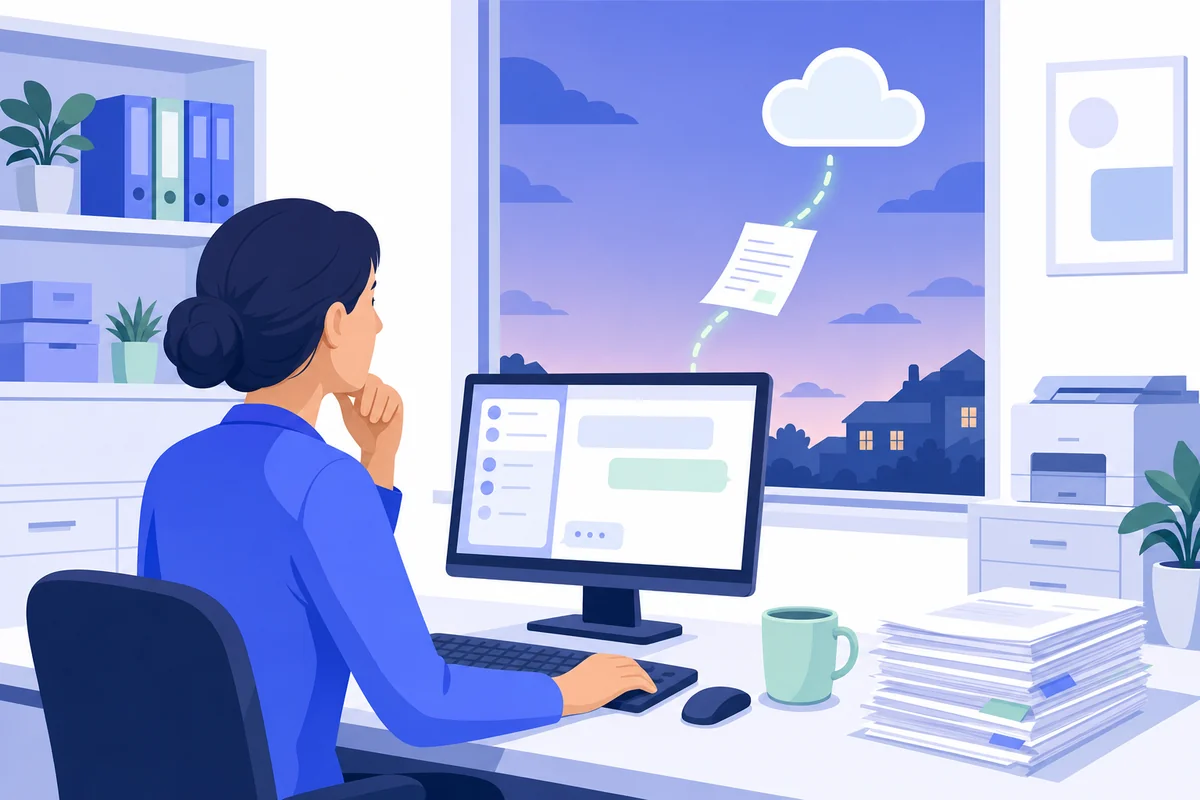
Ten to six, one complaint response, and a chatbot that drafts it in thirty seconds.
Why a GP practice manager asked us whether ChatGPT is safe
Thursday, 5.50pm, a GP surgery with 9,000 patients. The practice manager has a complaint response due by Friday: the patient's four-page letter, a summary of two consultations and the receptionist's note of a tense phone call. She pastes all three into ChatGPT on her own account and gets a calm, well-structured reply in thirty seconds. It is the best first draft she has had all year. Then she notices the patient's name, date of birth and diagnosis sitting in the chat history of an app on her personal phone.
She rang us the next morning with a question that sounds simple: is ChatGPT safe? The honest answer has two halves. ChatGPT itself is a well-secured product. Whether it is safe for you depends almost entirely on what you type into it.
How many GP surgeries already use ChatGPT
More than most practice policies admit. A BMJ Health & Care Informatics survey (2024) of 1,006 UK GPs found 20% were using generative AI in clinical practice, with ChatGPT the most used tool. By the time the Nuffield Trust surveyed 2,108 GPs (2025), 28% were using AI tools, and 11% were using tools they had found for themselves rather than ones the practice provided.
The rest of the workforce is no different. A Microsoft UK survey (2025) of 2,003 employees found 71% have used unapproved consumer AI tools at work and 51% still do every week. Only 32% said they worried about the privacy of the company or customer data they typed in. In a 12-person surgery, that is roughly 6 people a week using a chatbot nobody has assessed.
Why patient data raises the stakes
Health information is special category data under UK GDPR, which carries the strictest rules on who may process it and why. The Royal College of GPs is blunt about it: “patient identifiable information should not be entered into a web-hosted generative AI platform”. And the ICO has made clear that data protection law applies even when personal data ends up in an AI tool incidentally. The practice manager meant well. Intent is not a lawful basis.
Need Help with AI Solutions?
Get in touch with our team or try our AI assistant.
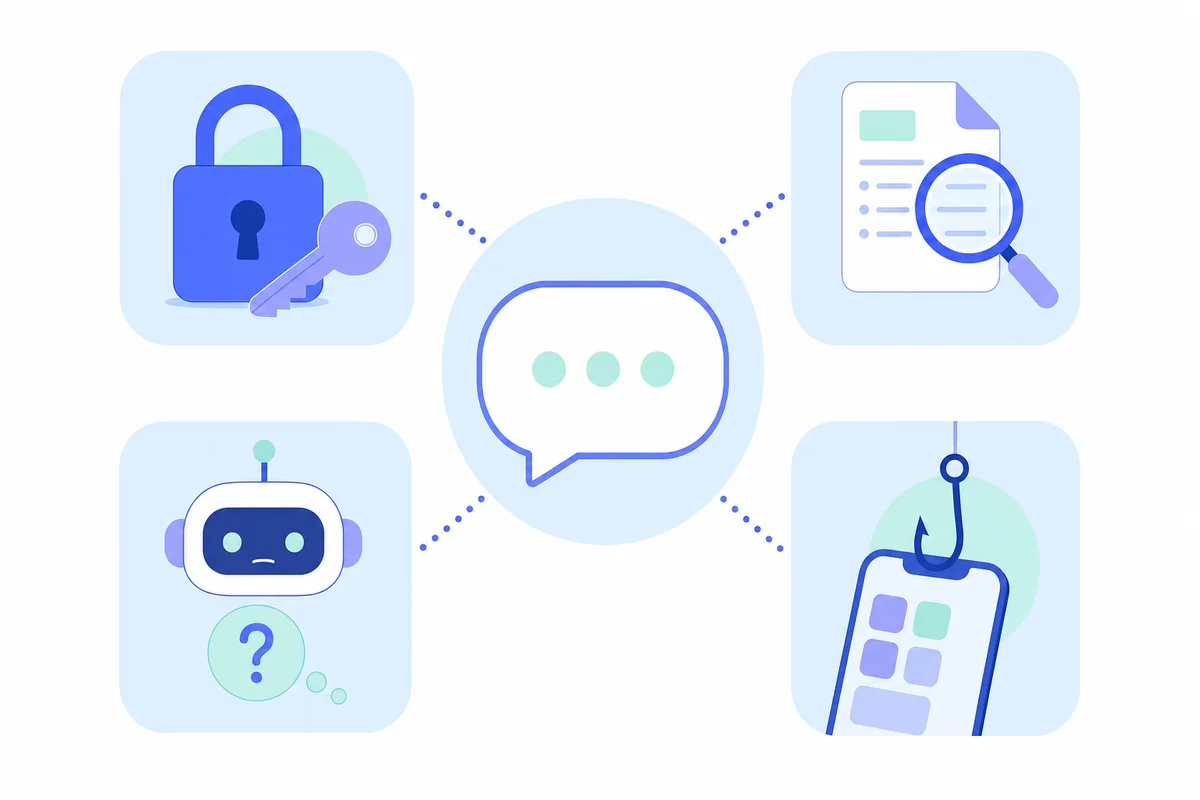
The risks sit around the chatbot, not inside it: sign-in, what you share, wrong answers and fake apps.
Is ChatGPT safe to use? The five risks that matter
ChatGPT is safe to use in the sense that matters most: OpenAI encrypts your data, offers two-step sign-in and runs an independently audited security programme for its business plans. What makes it unsafe is usually on your side of the screen: weak sign-in, sensitive data pasted in, answers taken on trust, and fake apps posing as the real one.
Here are the five risks, what has actually happened with each, and what reduces it:
Download only from chatgpt.com or the official app stores
The fake-app risk deserves a second look in a surgery, because phishing is already the most common attack on UK businesses: the government's Cyber Security Breaches Survey 2025/26 found 38% of businesses had experienced it in the past year. An email offering “ChatGPT Pro free for NHS staff” is exactly the sort of thing that gets clicked at 8.15am on a Monday.
Is ChatGPT safe for privacy?
Reasonably, once you change the defaults. Personal ChatGPT plans can use your conversations to train future models unless you switch that off; business plans do not by default. Most articles treat ChatGPT as one product, but there are effectively two, and which one you use decides where your text ends up:
Version
Used to train models?
What else to know
Free, Plus and Pro (personal)
Yes, unless you turn the setting off
Deleted chats are removed within 30 days, with legal and security exceptions
SOC 2 audited, encrypted at rest (AES-256) and in transit (TLS 1.2+)
A model on your own machine
No; nothing reaches a provider
You set the retention, because you hold the data
One habit catches people out: the share button. In 2025 Google indexed nearly 4,500 shared ChatGPT conversations whose owners had ticked a box making them discoverable. OpenAI has since removed that option, but a shared link is still readable by anyone who has it. Do not share chats that contain anything about a patient.
Is it safe to upload a bank statement to ChatGPT?
Only with the identifying parts removed. A bank statement carries your name, address, account number and sort code, plus a month of your life in transactions. Remove those details first, use Temporary Chat, and ask about the patterns, not the person. For the practice's own accounts, payroll or supplier statements, do not upload them to a personal account.
Which AI has the best privacy?
Among the cloud chatbots, Mistral's and OpenAI's score best. Incogni's 2025 privacy ranking of nine platforms put Mistral's Le Chat first, with ChatGPT and Grok close behind, and Meta AI, Gemini and Copilot at the bottom. Its 2026 update of 13 platforms had Vibe (Le Chat's new name) and ChatGPT jointly leading.
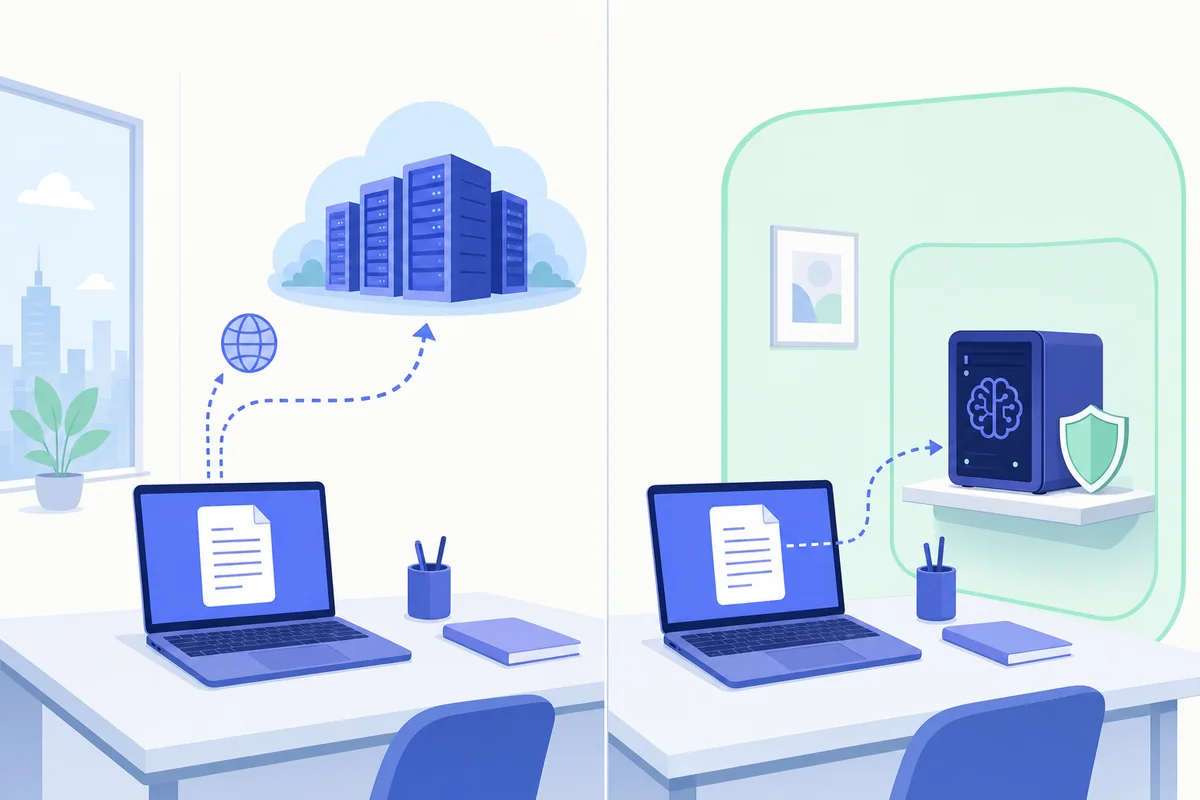
Every cloud chatbot sends the document somewhere. A local model keeps it in the room.
But every one of those rankings compares how cloud companies handle data you have already sent them. The more private option is not sending it. The National Cyber Security Centre advises “not to include sensitive information in queries to public LLMs” and points organisations with sensitive data towards private or self-hosted models instead. We cover how that works in what private AI means for a small business.
Need Help with AI Solutions?
Get in touch with our team or try our AI assistant.
One machine on the shelf, shared by the whole surgery, with the patient letters staying on it.
How a GP surgery can use AI without patient data leaving the building
Run the assistant on a machine inside the surgery instead of a provider's servers. Staff get the same ChatGPT-style drafting and summarising, but the complaint letters, referral letters and policies they paste in never leave the practice network. With no AI provider processing patient data, there is no third party to assess, contract with or explain in the toolkit.
That is what our Local AI service does. We install a dedicated machine on the practice network, rented rather than sold, running open-weight models (AI models whose files are published, so they can run anywhere). Staff sign in with the Microsoft 365 or Google accounts they already have. The only outside connection is that sign-in; nothing typed into the assistant goes out. Here is how the same week of work looks both ways:
Surgery task
In a personal ChatGPT account
With Local AI
Drafting a complaint response
Patient letter and consultation notes sent to a US provider
Stays on the surgery machine
Summarising a hospital discharge letter
Diagnosis and medication list in someone's chat history
Summarised in place, nothing kept outside
Searching practice policies and protocols
Policies uploaded one chat at a time
A shared document space that answers with the page reference
Rewording a patient information leaflet
Fine: nothing confidential
Also fine
Answering appointment calls
Not what ChatGPT does
A job for our cloud AI Receptionist, which never sees clinical records
The private AI for GP practices page sets out the data protection side in more detail, including what goes in the Data Security and Protection Toolkit.
What it does not do
It does not replace the paperwork. NHS England's guidance on AI scribes expects a Data Protection Impact Assessment and clinical safety documentation (DCB0160) before rollout, and the same discipline is sensible for any assistant that touches patient letters. Keeping the data in-house makes that assessment shorter, not unnecessary.
It also does not do anyone's thinking. A GP still reads every summary against the letter, exactly as they would a registrar's draft. And on the hardest reasoning tasks, the largest cloud models keep a small lead over models sized for one office; our piece on why businesses use a local LLM is honest about that trade.
When ChatGPT is the right answer
For the leaflet, the practice newsletter, the job advert and the rota email, a ChatGPT account with training switched off is perfectly reasonable. The line is simple: if you would not read it aloud in the waiting room, it does not go into a public chatbot.
Need Help with AI Solutions?
Get in touch with our team or try our AI assistant.
For general writing and research, yes. OpenAI encrypts data and offers multi-factor sign-in. The risks are sharing sensitive information, trusting wrong answers and downloading fake apps. Personal accounts can also use your chats for training unless you switch that off.
Is ChatGPT safe to use at work?
For non-confidential tasks, with the employer's approval, yes. The problem is staff using personal accounts for client or patient data, which puts that data with a provider the business has never assessed. Agree which tasks are allowed, and give people an approved tool for the rest.
Is ChatGPT safe for privacy?
Reasonably, if you change the defaults. Turn off “Improve the model for everyone”, use Temporary Chat for anything personal, and never share links to chats with private details. Business plans are not used for training by default. Independent rankings place ChatGPT among the more private chatbots.
Is it safe to upload a bank statement to ChatGPT?
Not as it is. Remove your name, address, account number and sort code first, and use Temporary Chat. Ask about spending patterns rather than uploading a full statement. Business statements, payroll and supplier records should not go into a personal account.
Which AI has the best privacy?
Among cloud chatbots, Incogni's 2026 ranking put Mistral's Vibe and ChatGPT at the top, with Gemini and Meta AI scoring worst. The most private option is a model running on your own hardware, because your text never reaches a provider at all.
Can GPs put patient information into ChatGPT?
No. The Royal College of GPs says patient-identifiable information should not be entered into a web-hosted generative AI platform. Health data is special category data under UK GDPR. Use an approved, assessed tool, or an assistant that runs inside the practice.
Does deleting a ChatGPT chat delete it for good?
Eventually. OpenAI says deleted chats are permanently removed from its systems within 30 days, apart from limited legal and security exceptions. Temporary Chats are also kept for up to 30 days.
Where to start
Ask your team, without blame, what they have pasted into a chatbot this month. Sort the answers into two piles: things you would read aloud in the waiting room, and things you would not. The first pile can stay with ChatGPT. The second pile is the case for keeping AI in the building.
Back to Thursday, 5.50pm. Same practice manager, same complaint. She drops the three documents into the assistant on the surgery's own machine, gets the same calm first draft, checks it against the letter and signs it off. The patient's diagnosis is in the practice record, where it belongs, and nowhere else. If you would like to know whether that would work for your surgery, tell us which documents your team would want it reading, or ask the chat agent on this page.