
Local AI for Dental Practices: Patient Documents That Stay in the Practice
Referral letters, treatment plan letters, complaint responses, CQC policies. The paperwork a practice manager would happily hand to an assistant is exactly the paperwork that cannot go to a public chatbot. Local AI puts the assistant in the building.
£500 per month for the software and the hardware rental. You rent the machine — you don’t buy it.
Local AI for dental practices is a dedicated AI machine installed in the practice that drafts letters, summarises referral correspondence and searches your own policies and SOPs — with every document staying inside the building. It sits alongside your practice management software, never touches the clinical record, and is installed and supported by us.
See what it would do for your practice
A short call with the practice manager or principal. If your paperwork does not justify a machine, we will say so.
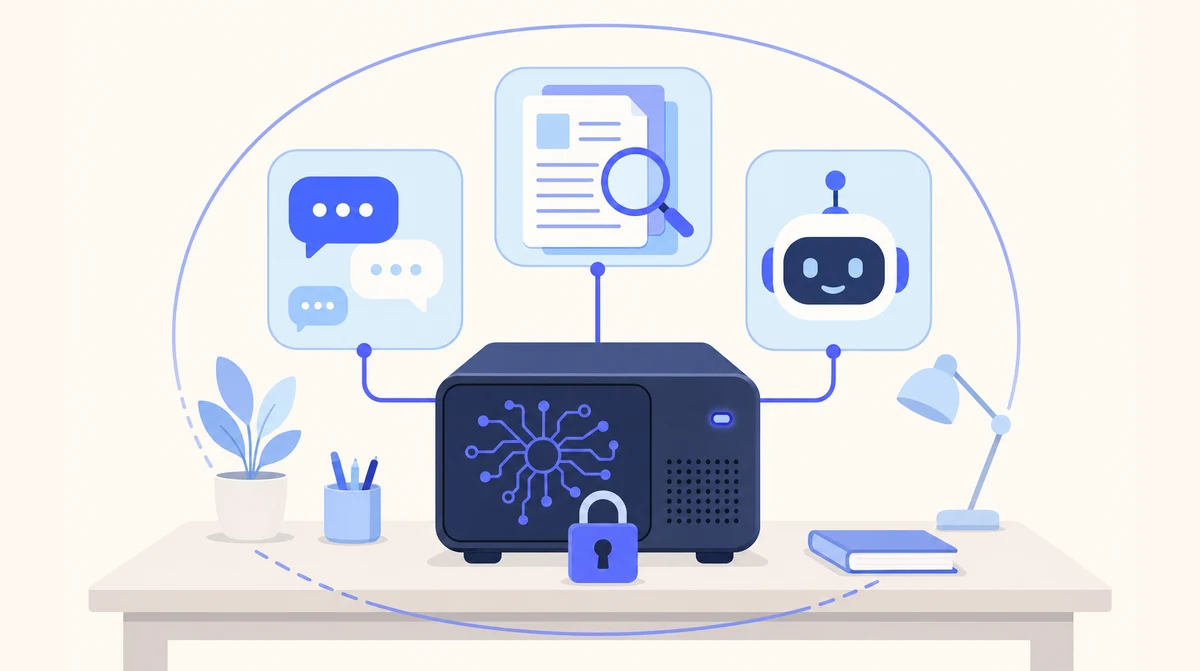
One machine in the practice office, running private chat, document spaces and assistants. Patient documents never leave the building.
Cloud Agents for the Front Desk, Local AI for the Records
The phone and the enquiry inbox are not where a practice’s confidentiality problem lives, so most practices run those on our hosted agents and keep patient documents on the Local AI machine.
- ☁ Cloud-based AI Receptionist
- ☁ Cloud-based Email Manager
- ☁ Cloud-based Leads Outreach
- 🏢 On-premise Local AI
Cloud AI Versus a Machine in the Practice
The GDC expects every member of the dental team to protect patients’ information. That is a hard standard to meet with a chatbot nobody in the practice controls.
| Public chatbot | Cloud AI with a privacy setting | Local AI in the practice | |
|---|---|---|---|
| Where patient letters go | The provider’s servers | The provider’s servers | A machine in your building |
| GDC duty to protect patient information | Hard to evidence | A processor to assess and contract | No third-party processor for the AI step |
| Used to train models | Depends on the plan | Usually not, per the setting | Never |
| Reads your policies and SOPs | Only what is pasted in | If you upload them | Spaces with citations, imported at setup |
| Who can see what | Nobody in the practice | Per-seat accounts | Your Microsoft or Google sign-in |
| Someone to ring | No | A helpdesk | The people who installed it |
What a Practice Actually Asks It to Do
Dental practice AI is usually sold as something for the front desk or the marketing. The paperwork that actually eats a practice manager’s week is different: referral letters to secondary care and the correspondence that comes back, treatment plan letters in the practice’s own wording, responses to complaints that must be careful, complete and on time, and the policies, audits and training records a CQC inspection will ask to see. None of it can casually go to a public chatbot, because all of it is patient information or practice-confidential.
Local AI puts an assistant in the practice office instead. Letters, policies, SOPs and correspondence go into document spaces on a machine in the building. A nurse can ask where the radiation protection file is and when it was last reviewed, and get the answer with the page cited. The practice manager can draft a complaint response from the file and the practice’s complaints policy, then edit it. A principal can compare two supplier contracts without reading both twice.
What it does not do matters as much. It does not connect to your practice management system and it does not touch the clinical record. It is not for diagnosis, treatment planning or reading radiographs, and we say that plainly because the private chat accepts images and someone will be tempted. Private AI for dentists, done properly, is administrative.
On data protection under UK GDPR, the practice remains the data controller and the existing retention policy keeps applying. There is no third-party AI processor for the work the machine does and no restricted transfer, so the questions that make cloud tools hard to sign off do not arise for it. We act as a processor only for the support access you grant us, under a data processing agreement.
The Documents, and What Happens to Them
Every row is a document the practice already holds. The last row is the one we are asked about most.
| Document | What the practice asks for | What stays where |
|---|---|---|
| Referral letters and replies | Draft the referral; summarise what came back | On the machine, in the practice |
| Treatment plan and recall letters | Draft in the practice’s wording from the plan | On the machine, in the practice |
| Complaints | Draft a response from the file and your complaints policy | On the machine, in the practice |
| Policies, SOPs, audits, training records | Find it, check the review date, cite the page | On the machine, in the practice |
| Supplier and lab contracts | Compare terms, flag the differences | On the machine, in the practice |
| Clinical records and radiographs | Not used — stays in the practice system | Your practice management software |
| Included | Not included |
|---|---|
| A dedicated machine, sized for your team, rented to you (not sold) and installed by us | A cloud subscription — nothing runs on our servers |
| £500 per month for the software and the hardware rental | Buying the hardware — the machine is rented, not sold |
| Private chat, document spaces and custom assistants on that machine | Clinical, legal or financial advice — it drafts, you decide |
| Single sign-on with your Microsoft 365 or Google Workspace | A replacement for your practice, case or CRM system |
| Import of your existing documents, and training for the people using it | Phone answering — see AI Receptionist |
| Software updates, model upgrades and support from the people who installed it | Inbox automation — see Email Manager |
| Document spaces for policies, SOPs and correspondence, imported at setup | Any connection to your practice management or clinical system |
From Practice Manager’s Call to a Machine in the Office
Weeks, not months. Most practices start with the policies folder or the referral correspondence and widen from there.
A call with the practice manager
NHS, private or mixed, how many staff, which paperwork goes first. We specify the machine from that.
Install and import
The machine goes on the practice network. Sign-in connects to your Microsoft 365 or Google Workspace. Policies, SOPs and correspondence are imported into spaces.
Train the team, then support
We train the people who will use it — usually the practice manager and reception first — then keep the software and models current.
Where Local AI Is the Wrong Answer
We would rather lose the enquiry than the trust. Three things we tell every prospect before they sign anything.
It is not a clinical tool
Local AI is for the practice’s administrative documents. It is not for diagnosis, treatment planning or interpreting images, and nothing about it is registered as a medical device. Clinical decisions stay with the clinician.
It is slower than the big cloud models
Open-weight models on a single machine are capable for summarising, drafting and answering questions about your own documents. For frontier reasoning on hard, novel problems, the largest cloud models are still ahead. That is the trade.
It is a weeks-long install, not a sign-up
A cloud agent is live in days. Local AI needs the machine specified, delivered, installed on your network and your documents imported. Weeks, not months — but not tomorrow.
Built for a Practice, Not a Data Centre
Stays out of the clinical record
It reads letters, policies and correspondence. Your practice management system is untouched.
One machine in the office
Sized for the team, running open-weight models, on a shelf in the practice office. No server room, no IT project.
GDC and CQC in mind
Patient information never leaves the building, and inspection evidence is searchable with the page cited.
Honest about the trade
Local models are capable and somewhat slower than the largest cloud services. We say so before you sign anything.
Which Page Answers Your Practice’s Question
| If your question is… | The short answer | Read more |
|---|---|---|
| What exactly is installed? | One machine: chat, spaces, assistants, support | On-premises AI solution |
| What does our data protection lead need? | No processor, no transfer, for the AI step | GDPR compliant AI |
| Is this what people mean by private AI? | Yes — private by construction | Private AI |
| We also need the phone answered | A hosted agent, live in days | AI Receptionist |
| We are a GP practice, not dental | Practice documents stay in the surgery | Local AI for GP practices |
| We are in London | Installed on site across the capital | Local AI London |
| Why on-premises at all? | The case for Local AI, in full | Local AI product page |
Local AI for Dentists: Common Questions
What does local AI do in a dental practice?
It drafts and summarises the practice’s own paperwork: patient letters in your wording, referral correspondence, complaint responses, policies and SOPs, supplier contracts. Staff ask it questions and get answers with a citation to the page. All of it happens on a machine inside the practice.
Does it connect to our practice management software?
No, and that is deliberate. The clinical record stays in your practice system. Local AI works on the documents around it — letters, policies, correspondence, contracts — which are imported into document spaces on the machine.
Is private AI for dentists any different from a cloud tool with a privacy setting?
Yes. A privacy setting promises the provider will not train on your data; the documents still leave the practice. With Local AI, the model, the documents and the chat history all live on a machine in your building. Nothing is sent anywhere to produce an answer.
Does it help with CQC?
It helps you find and produce evidence quickly. Policies, SOPs, audits and training records go into spaces, so a question like “where is our safeguarding policy and when was it reviewed?” gets an answer with the page cited. It does not replace the policies or the reviews.
Can it read clinical photographs or radiographs?
The private chat accepts images, but we advise against using it for anything clinical. Local AI is for the practice’s administrative documents. Diagnosis and treatment decisions stay with the clinician, full stop.
How is it priced?
£500 per month for the software and the hardware rental. The practice rents the machine rather than buying it, so there is no equipment purchase to budget for. We size it on a short call with the practice manager.
Put the Assistant in the Practice
Tell us which paperwork takes the most time and whether you are NHS, private or mixed. One short call to size the machine; a visit only if it makes sense.
Prefer email? sghaith@businessaiagents.co.uk