
Local AI for Estate Agents: Files That Stay in the Branch
Tenancy agreements, AML due-diligence records, landlord instructions and vendor correspondence are full of other people’s personal data. The listing copy you would love an assistant to draft sits in the same folder. Local AI puts the assistant in the branch.
£500 per month for the software and the hardware rental. You rent the machine — you don’t buy it.
Local AI for estate agents is a dedicated AI machine installed in the branch that drafts listings from your notes, summarises tenancy and sales files, checks AML records for gaps and answers questions across landlord and vendor correspondence — with every document staying in the office. Installed and supported by us; your CRM stays as it is.
See what it would do for your branch
A short call with the branch manager or director. If your paperwork does not justify a machine, we will say so.
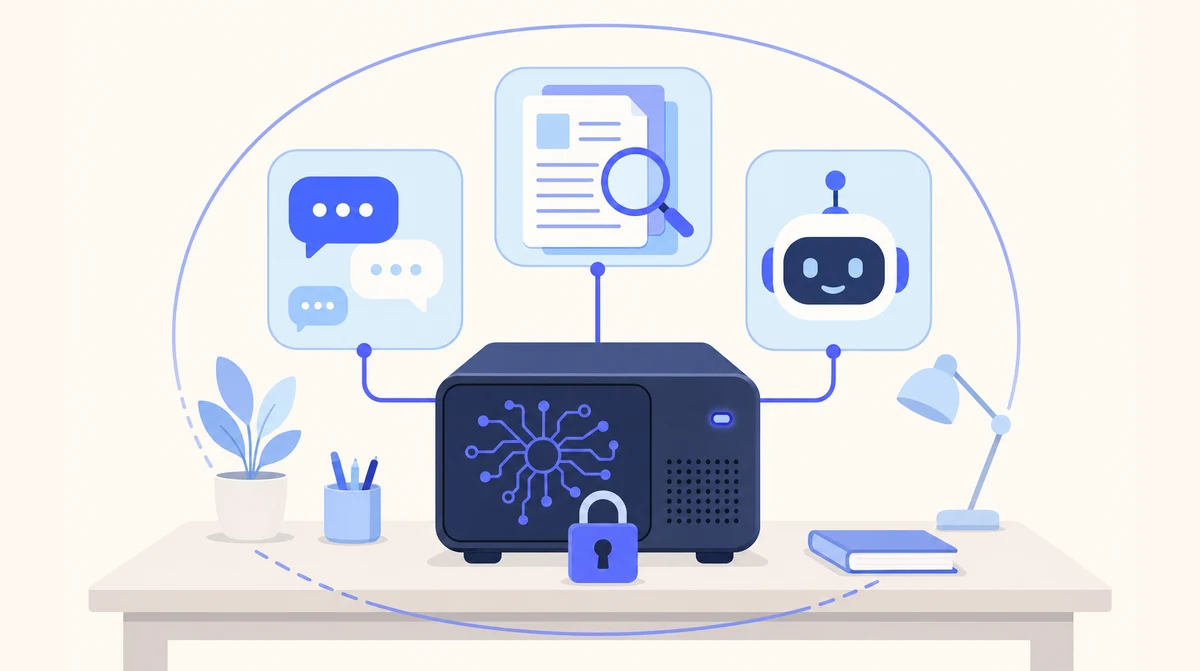
One machine in the branch, running private chat, document spaces and assistants. Tenancy files and AML records never leave the office.
Cloud Agents for Enquiries, Local AI for the Paperwork
Viewing requests and valuation enquiries suit a hosted agent; tenancy files, AML records and vendor correspondence suit a machine in the branch. Most agencies run both.
- ☁ Cloud-based AI Receptionist
- ☁ Cloud-based Email Manager
- ☁ Cloud-based Leads Outreach
- 🏢 On-premise Local AI
Whose Data Is in the Folder
An agency’s files are mostly other people’s personal data — tenants’, landlords’, vendors’ and buyers’. That is the reason estate agent AI has to be careful about where it runs.
| Public chatbot | Cloud AI with a privacy setting | Local AI in the branch | |
|---|---|---|---|
| Where tenancy and sales files go | The provider’s servers | The provider’s servers | A machine in the branch |
| AML identity documents | Should never be pasted in | A processor to assess | Never leave the office |
| Landlord and vendor correspondence | Disclosed to a provider | Disclosed under contract | Stays in the building |
| Used to train models | Depends on the plan | Usually not, per the setting | Never |
| Reads your files and house style | Only what is pasted in | If uploaded | Spaces with citations, imported at setup |
| Who can see what | Nobody in the agency | Per-seat accounts | Your Microsoft or Google sign-in |
What a Branch Actually Uses It For
Estate agent AI is usually pitched as a listing-writer, and it is a good one: viewing notes in, a first draft in the branch’s house style out, with the material-information items National Trading Standards expects checked off against the file. But the listing is the least sensitive document in the branch. The tenancy agreement, the references, the deposit paperwork, the landlord’s instructions, the vendor’s circumstances and the identity documents collected because HMRC supervises estate agents for anti-money-laundering — that is where the personal data lives, and it is the same folder.
Local AI puts the assistant inside the branch, so the whole folder can be used. Sales and lettings files, correspondence and templates go into document spaces on a machine in the office. A negotiator can ask what a tenancy says about subletting and get the clause. A lettings manager can have a tenancy file summarised before a renewal conversation. A branch manager can have a custom assistant go through a customer due-diligence file and list which documents are present and which are missing against the agency’s own checklist — it does not verify anyone’s identity, and it does not make the risk assessment.
Nothing connects to the portals or the CRM. Rightmove, Zoopla and OnTheMarket listings, and whatever system runs the branch, stay exactly as they are; documents come out to the machine, and what the assistant drafts goes back by hand. Which staff can see which files follows the Microsoft 365 or Google Workspace sign-in the agency already uses.
Private AI for estate agents matters more than the sector tends to assume, because the data belongs to the customers, not the agency. Under UK GDPR the agency remains the data controller, its retention policy keeps applying, and there is no AI processor and no transfer to add to the record. We act as a processor only for the support access you grant us, under a data processing agreement.
The Documents, and What Happens to Them
Every row is paperwork the branch already holds. The last two rows in each table are the ones agents ask about first.
| Document | What the branch asks for | What stays where |
|---|---|---|
| Viewing notes and photos | A listing draft in house style; material-information gaps listed | On the machine, in the branch |
| Tenancy agreements and renewals | What the tenancy says; a summary before renewal | On the machine, in the branch |
| Sales files and vendor correspondence | A summary; the answer to a buyer’s question, cited | On the machine, in the branch |
| AML customer due-diligence files | Which documents are present and missing, against your checklist | On the machine, in the branch |
| Landlord instructions and management agreements | What was agreed; the clause on repairs | On the machine, in the branch |
| CRM and portal listings | Not connected — a person pastes drafts back | Your existing systems |
| Included | Not included |
|---|---|
| A dedicated machine, sized for your team, rented to you (not sold) and installed by us | A cloud subscription — nothing runs on our servers |
| £500 per month for the software and the hardware rental | Buying the hardware — the machine is rented, not sold |
| Private chat, document spaces and custom assistants on that machine | Clinical, legal or financial advice — it drafts, you decide |
| Single sign-on with your Microsoft 365 or Google Workspace | A replacement for your practice, case or CRM system |
| Import of your existing documents, and training for the people using it | Phone answering — see AI Receptionist |
| Software updates, model upgrades and support from the people who installed it | Inbox automation — see Email Manager |
| Custom assistants for recurring checks, such as the AML file review | Identity verification or the AML risk assessment itself — a person does that |
From a Branch Manager’s Call to a Machine in the Office
Weeks, not months. Multi-branch agencies usually start with one branch and one job — the lettings files, or the AML checklist — and widen from there.
A call with the branch or director
Sales, lettings or both, how many staff, which paperwork goes first. We specify the machine from that.
Install and import
The machine goes on the branch network. Sign-in connects to your Microsoft 365 or Google Workspace. Files, templates and correspondence for the first team are imported into spaces.
Train the team, then support
We train negotiators and managers on what it does and what it is not for. Updates, model upgrades and support follow, from the people who installed it.
Where Local AI Is the Wrong Answer
We would rather lose the enquiry than the trust. Three things we tell every prospect before they sign anything.
It does not verify anyone
Local AI can list which documents an AML file is missing against your checklist. It does not verify identity, it does not make the risk assessment, and it does not replace your compliance officer. The listing facts are still the agent’s to confirm.
It is slower than the big cloud models
Open-weight models on a single machine are capable for summarising, drafting and answering questions about your own documents. For frontier reasoning on hard, novel problems, the largest cloud models are still ahead. That is the trade.
It is a weeks-long install, not a sign-up
A cloud agent is live in days. Local AI needs the machine specified, delivered, installed on your network and your documents imported. Weeks, not months — but not tomorrow.
Built for a Branch, Not a Head Office
Customers’ data stays in the branch
Tenants’, landlords’, vendors’ and buyers’ documents never leave the building. No third-party AI processor, no transfer.
Portals and CRM untouched
Rightmove, Zoopla, OnTheMarket and your CRM stay as they are. Documents come out; drafts go back by hand.
One machine, one branch to start
Sized for the team, running open-weight models, on a shelf in the back office. Widen to other branches when it has earned it.
Honest about the trade
Local models are capable and somewhat slower than the largest cloud services. We say so before you sign anything.
Which Page Answers Your Agency’s Question
| If your question is… | The short answer | Read more |
|---|---|---|
| What exactly is installed? | One machine: chat, spaces, assistants, support | On-premises AI solution |
| What does our compliance officer need? | No processor, no transfer, for the AI step | GDPR compliant AI |
| Is this what people mean by private AI? | Yes — private by construction | Private AI |
| Viewing requests go unanswered | A hosted agent, live in days | AI Receptionist |
| The enquiries inbox is the real problem | Hosted inbox automation | Email Manager |
| We are in Manchester | Installed on site across Greater Manchester | Local AI Manchester |
| Why on-premises at all? | The case for Local AI, in full | Local AI product page |
Local AI for Estate and Letting Agents: Common Questions
What does local AI do in an estate agency?
It works on the paperwork the branch already holds: draft listing copy from viewing notes in your house style, summarise a tenancy or sales file, answer “what does this tenancy say about pets?” with the clause cited, and flag which customer due-diligence documents an AML file is missing. All of it on a machine in the branch.
Does it connect to our CRM or the portals?
No. Rightmove, Zoopla, OnTheMarket and your CRM stay exactly as they are. Documents and correspondence are exported into spaces on the machine; what the assistant drafts is pasted back by a person.
Why does an estate agent need private AI?
Because a branch holds a great deal of personal data that is not its own: tenants’ references and bank details, landlords’ instructions, vendors’ circumstances, and the identity documents collected for anti-money-laundering checks. None of that should be pasted into a public chatbot, and with Local AI none of it leaves the building.
Can it help with material information on listings?
It can check a draft listing against the material-information items your branch requires and list what is missing — tenure, council tax band, the items National Trading Standards expects — from the file. The agent still confirms the facts.
Can it help with AML files?
As an assistant, yes. A custom assistant can go through a customer due-diligence file and list which documents are present and which are absent against your own checklist. It does not verify identity and it does not make the risk assessment; a person does.
How is it priced?
£500 per month for the software and the hardware rental. The agency rents the machine, it does not buy it, so there is no up-front hardware cost per branch. A short call sizes it for the team and the files.
Put the Assistant in the Branch
Tell us whether you are sales, lettings or both, and which paperwork takes longest. One short call to size the machine; a visit only if it makes sense.
Prefer email? sghaith@businessaiagents.co.uk